 Archive
The reduced nutrient digestibility of low-protein (LP) diets has been shown to be caused by the weakened fermentative capacity of the post-gut flora. The dynamic regulation of dietary protein contents on post-gut microbial population and fermentative metabolism is unclear. Twelve growing barrows (19.9 ± 0.8 kg) fitted with a T-cannula at the blind end of the cecum were randomly administered a high-protein (HP, 21.5% crude protein [CP]) diet or an LP (15.5% CP) diet for 28 d. The cecal content and feces were collected at d 1, 14, and 28 of the experiment for microflora structures and metabolite concentrations analysis. The nutrient digestibility coefficient and plasma biochemical parameters were also determined. Compared with the HP treatment, the LP treatment showed decreased plasma urea nitrogen concentration and apparent total tract digestibility of dry matter, gross energy, and CP (P < 0.01). In addition, urinary nitrogen losses, total nitrogen losses, and daily nitrogen retention in the LP treatment were lower than those in the HP treatment (P < 0.01), and the nitrogen retention-to-nitrogen intake ratio in the LP treatment was increased (P < 0.01). The HP group showed increased cecal total short-chain fatty acids (SCFA) concentration and fecal propionate, butyrate, and total SCFA concentrations (P < 0.05) on d 14 and 28, which may be mainly related to the elevated abundance of SCFA-producing bacteria, such as Ruminococcus, Lactobacillus, and Prevotella (P < 0.05). Probiotics, such as Bifidobacterium, Bacteroidales S24-7, and Rikenella, enriched in the LP treatment possibly contributed to reduced plasma endotoxin content. The differences in the abundances of almost all the above-mentioned flora appeared on d 28 but not d 14. Likewise, differences in the Simpson and Shannon indices and clustering patterns of the microbiota between treatments were also only observed on d 28. To sum up, in a time-dependent manner, the LP diet increased probiotics with gut-improving functions and decreased SCFA-producing bacteria, which may cause enhanced intestine health and reduced nutrient digestibility.
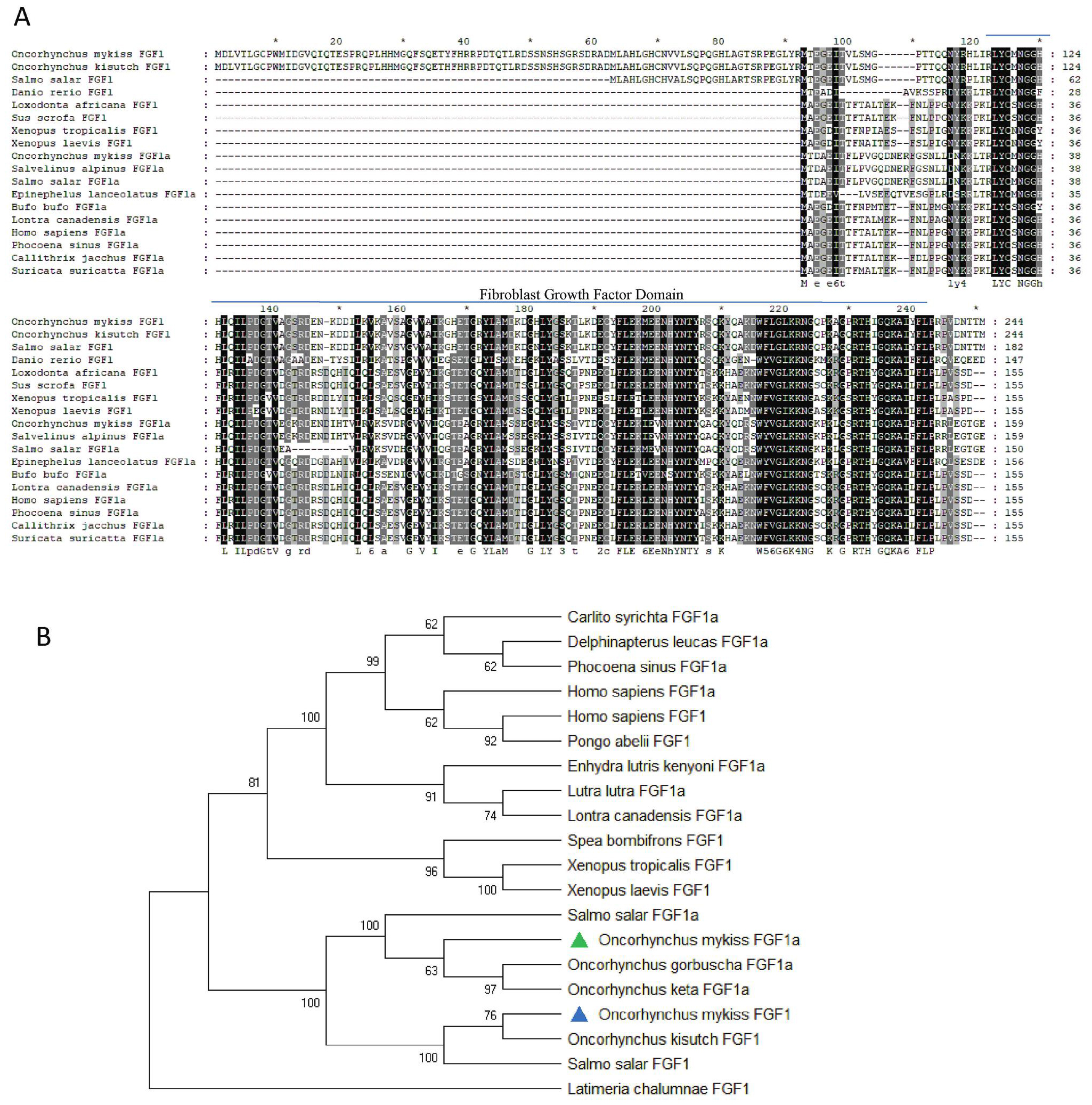
Fibroblast growth factor 1 (FGF1) regulates vertebrate cell growth, proliferation and differentiation, and energy metabolism. In this study, we cloned rainbow trout (Oncorhynchus mykiss) fgf1 and fgf1a, prepared their recombinant proteins (rFGF1 and rFGF1a), and described the molecular mechanisms by which they improve glycolipid metabolism in carnivorous fish. A 31-d feeding trial was conducted to investigate whether they could enhance glycolipid metabolism in rainbow trout on high-carbohydrate diets (HCD). A total of 720 rainbow trout (8.9 ± 0.5 g) were equally divided into 4 groups: the chow diet (CD) group injected with PBS, the HCD group injected with PBS, the HCD group injected with rFGF1 (400 ng/g body weight), and the HCD group injected with rFGF1a (400 ng/g body weight). The results showed that short-term HCD had a significant positive effect on the specific growth rate (SGR) of rainbow trout (P < 0.05). However, it led to an increase in crude fat, serum triglyceride (TG) and glucose content, as well as serum glutamic pyruvic transaminase (GPT) and glutamic oxalacetic transaminase (GOT) contents (P < 0.05), suggesting a negative health effect of HCD. Nevertheless, rFGF1 and rFGF1a showed beneficial therapeutic effects. They significantly reduced the crude fat content of the liver, serum TG, GOT, and GPT contents caused by HCD (P < 0.05). The upregulation in atgl, hsl, and acc2 mRNAs implied the promotion of TG catabolism. Moreover, rFGF1 and rFGF1a contributed to promoting lipolysis by activating the AMPK pathway and reducing lipid accumulation in the liver caused by HCD. In addition, the rFGF1 and rFGF1a-treated groups significantly reduced serum glucose levels and elevated hepatic glycogen content under HCD, and increased glucose uptake by hepatocytes. We observed a decrease in mRNA levels for pepck, g6pase, and pygl, along with an increase in mRNA levels for gys, glut2, and gk in the liver. Furthermore, these proteins regulated hepatic gluconeogenesis and glycogen synthesis by increasing the phosphorylation level of AKT, ultimately leading to an increase in GSK3β phosphorylation. In conclusion, this study demonstrates that rFGF1 and rFGF1a can enhance lipolysis and glucose utilization in rainbow trout by activating the AMPK pathway and AKT/GSK3β axis.
Trimethylamine oxide (TMAO) is a microbiota-derived metabolite, and numerous studies have shown that it could regulate fat metabolism in humans and mice. However, few studies have focused on the effects of TMAO on fat deposition in growing-finishing pigs. This study aimed to investigate the effect of TMAO on fat deposition and intestinal microbiota in growing-finishing pigs. Sixteen growing pigs were randomly divided into 2 groups and fed with a basal diet with 0 or 1 g/kg TMAO for 149 d. The intestinal microbial profiles, fat deposition indexes, and fatty acid profiles were measured. These results showed that TMAO supplementation had a tendency to decrease lean body mass (P < 0.10) and significantly increased backfat thickness (P < 0.05), but it did not affect growth performance. TMAO significantly increased total protein (TP) concentration, and reduced alkaline phosphatase (ALP) concentration in serum (P < 0.05). TMAO increased the α diversity of the ileal microbiota community (P < 0.05), and it did not affect the colonic microbial community. TMAO supplementation significantly increased acetate content in the ileum, and Proteobacteria and Escherichia–Shigella were significantly enriched in the TMAO group (P < 0.05). In addition, TMAO decreased fat content, as well as the ratio of linoleic acid, n-6 polyunsaturated fatty acids (PUFA), and PUFA in the liver (P < 0.05). On the contrary, TMAO increased intramuscular fat content of the longissimus dorsi muscle, whereas the C18:2n6c ratio was increased, and the n-6 PUFA:PUFA ratio was decreased (P < 0.05). In vitro, 1 mmol/L TMAO treatment significantly upregulated the expression of FASN and SREBP1 in C2C12 cells (P < 0.05). Nevertheless, TMAO also increased adipocyte area and decreased the CPT-1B expression in subcutaneous fat (P < 0.05). Taken together, TMAO supplementation regulated ileal microbial composition and acetate production, and regulated fat distribution and fatty acid composition in growing-finishing pigs. These results provide new insights for understanding the role of TMAO in humans and animals.
Previous studies have shown that maternal resveratrol improved growth performance and altered the microbial composition of suckling piglets under hot summer conditions. However, it remains unclear how maternal resveratrol improves growth performance of suckling piglets during high summer temperatures. A total of 20 sows (Landrace × Large White; three parity) were randomly assigned to 2 groups (with or without 300 mg/kg resveratrol) from d 75 of gestation to d 21 of lactation during high ambient temperatures (from 27 to 30 °C). The results showed that maternal resveratrol supplementation increased total daily weight gain of piglets under hot summer conditions, which is consistent with previous studies. Furthermore, we found that maternal resveratrol improved the intestinal morphology and intestinal epithelial proliferation in suckling piglets. Dietary resveratrol supplementation affected the characteristics of exosome-derived microRNAs (miRNAs) in sow colostrum, as well as the genes targeted by differentially produced miRNAs. MiRNAs are concentrated in the tight junction pathway. As a result, the expression of intestinal tight junction proteins was increased in suckling piglets (P < 0.05). Notably, maternal resveratrol increased the intestinal secretory immunoglobulin A (sIgA) levels of suckling piglets via colostrum immunoglobin (P < 0.05), which could increase the abundance of beneficial microbiota to further increase the concentration of short chain fatty acids (SCFA) in suckling piglets' intestine (P < 0.05). Finally, our correlation analysis further demonstrated the positive associations between significantly differential intestinal microbiota, intestinal sIgA production and SCFA concentrations, as well as the positive relation between total daily weight gain and intestinal health of suckling piglets. Taken together, our findings suggested that maternal resveratrol could promote intestinal health to improve piglet growth during high summer temperatures, which might be associated with the immunoglobin and exosome-derived miRNAs in sows' colostrum.
The use of hemp as a forage source in livestock diets has been less studied because bioactive residues in animal tissues may pose a risk to consumers. This study investigated the effects of partial substitution of alfalfa hay (AH) with hemp forage (HF) in growing goat diets on growth performance, carcass traits, ruminal fermentation characteristics, rumen microbial communities, blood biochemistry, and antioxidant indices. Forty Xiangdong black goats with body weight (BW) 7.82 ± 0.57 kg (mean ± SD) were grouped by BW and randomly assigned into one of the four treatment diets (n = 10/treatment) in a completely randomized design. The goats were fed ad libitum total mixed rations containing 60% forage and 40% concentrate (DM basis). The diets included control (CON; 60% AH and 40% concentrate), 55% AH and 5% HF (HF5), 50% AH and 10% HF (HF10), and 40% AH and 20% HF (HF20). Increasing the substitution of HF for AH linearly decreased (P = 0.004) DM intake and improved feed conversion efficiency. However, final BW, average daily gain, carcass traits, meat quality, and most blood biochemistry indices did not differ among treatments. The ruminal NH3-N concentration (P = 0.003) and blood urine nitrogen (P = 0.050) linearly increased (P < 0.01) with increasing substitution rate of HF, whereas the total volatile fatty acids concentration quadratically changed (P = 0.007). Substitution of AH with HF had no effect on the diversity and richness of ruminal microbes, though it linearly decreased (P = 0.040) Prevotella_1 and linearly increased (P = 0.017) Rikenellaceae_RC9_gut_group. The cannabinoids and/or their metabolites were detected in both ruminal filtrates (8) and plasma (4), however, no detectable cannabinoid-related residues were observed in meat. These results indicate that the HF could be used to partially substitute AH in goat diets, whereas the effects vary between substitution rates of HF for AH. Although no cannabinoid-related residues were detected in meat, the presence of cannabinoids residues in blood warrants further study of HF feeding to confirm the cannabinoids residues are not present in the animal products.
In recent decades, a lot of research has been conducted to explore poultry feeding behavior. However, up to now, the processes behind poultry feeding behavior remain poorly understood. The review generalizes modern expertise about the hormonal regulation of feeding behavior in chickens, focusing on signaling pathways mediated by insulin, leptin, and ghrelin and regulatory pathways with a cross-reference to mammals. This overview also summarizes state-of-the-art research devoted to hypothalamic neuropeptides that control feed intake and are prime candidates for predictors of feeding efficiency. Comparative analysis of the signaling pathways that mediate the feed intake regulation allowed us to conclude that there are major differences in the processes by which hormones influence specific neuropeptides and their contrasting roles in feed intake control between two vertebrate clades.
This study aimed to investigate the effects of different proportions of dietary fermented sweet potato residue (FSPR) supplementation as a substitute for corn on the nutrient digestibility, meat quality, and intestinal microbes of yellow-feathered broilers. Experiment 1 (force-feeding) evaluated the nutrient composition and digestibility of mixtures with different proportions of sweet potato residue (70%, 80%, 90%, and 100%) before and after fermentation. In Experiment 2 (metabolic growth), a total of 420 one-day-old yellow-feathered broilers were randomly allocated to 4 groups and fed corn-soybean meal-based diets with 0, 5%, 8%, and 10% FSPR as a substitute for corn. The force-feeding and metabolic growth experiments were performed for 9 and 70 d, respectively. The treatment of 70% sweet potato residue (after fermentation) had the highest levels of crude protein, ether extract, and crude fiber and improved the digestibility of crude protein and amino acids (P < 0.05). Although dietary FSPR supplementation at different levels had no significant effect on growth performance and intestinal morphology, it improved slaughter rate, half-chamber rate, full clearance rate, and meat color, as well as reduced cooking loss in the breast and thigh muscles (P < 0.05). Dietary supplementation with 8% and 10% FSPR increased the serum immunoglobulin M and immunoglobulin G levels in broilers (P < 0.05). Furthermore, 10% FSPR increased the Shannon index and Ruminococcaceae_UCG-014, Ruminococcaceae_UCG-010 and Romboutsia abundances and decreased Sutterella and Megamonas abundances (P < 0.05). Spearman's correlation analysis showed that meat color was positively correlated with Ruminococcaceae_UCG-014 (P < 0.05) and negatively correlated with Megamonas (P < 0.05). Collectively, 70% sweet potato residue (after fermentation) had the best nutritional value and nutrient digestibility. Dietary supplementation with 8% to 10% FSPR as a substitute for corn can improve the slaughter performance, meat quality, and intestinal microbe profiles of broilers. Our findings suggest that FSPR has the potential to be used as a substitute for corn-soybean meals to improve the meat quality and intestinal health of broilers.
The prevalent practice of substituting fishmeal with plant protein frequently leads to disturbances in bile acid metabolism, subsequently increasing the incidence of metabolic liver diseases. Bile acid nutrients such as cholesterol, taurine and glycine have been shown to enhance bile acid synthesis and confer beneficial effects on growth. Therefore, this study aimed to investigate the effects of cholesterol-taurine-glycine (Ch-Tau-Gly) supplement on bile acid metabolism and liver health in spotted seabass (Lateolabrax maculatus) fed a plant-based diet. Two isonitrogenous and isolipidic diets were formulated: (1) plant protein-based diet (PP); (2) PP supplemented 0.5% cholesterol, 0.5% taurine and 1.3% glycine (CTG). Each experimental diet was randomly fed to quadruplicate groups of 30 feed-trained spotted seabass in each tank. The results revealed that supplementing plant-based diet with Ch-Tau-Gly supplement led to an increase in carcass ratio (meat yield) in spotted seabass (P < 0.05), indirectly contributing positively to their growth. The dietary supplement effectively suppressed endogenous cholesterol synthesis in the liver, promoted the expression of bile acid synthesis enzyme synthesis, and simultaneously the expression of intestinal fxr and its downstream genes, including hnf4α and shp (P < 0.05). The reduction in Lactobacillus_salivarius and bile salt hydrolase (BSH) were observed in CTG group with concurrently increased conjugated chenodeoxycholic acid (CDCA) bile acids (P < 0.05), suggesting the enhancement of the hydrophilicity of the bile acid pool. In CTG group, fatty liver was alleviated with a corresponding increase in lipid metabolism, characterized by a downregulation of genes associated with lipogenesis and lipid droplet deposition, along with an upregulation of genes related to lipolysis. Our study underscored the ability of Ch-Tau-Gly supplement to influence the gut microbiota, leading to an increase in the levels of conjugated CDCA (P < 0.05) in the bile acid pool of spotted seabass. The interplay between the gut microbiota and bile acids might constitute a crucial pathway in the promotion of liver health. These findings offer a promising solution, suggesting that Ch-Tau-Gly supplement have the potential to promote the growth of aquatic species and livestock fed on plant-based diets while addressing issues related to metabolic fatty liver.
Nitrogen pollution resulting from excessive feed consumption poses a significant challenge for modern swine production. Precision nutrition technology seems to be an effective way to solve this problem; therefore, understanding the law of pig body composition deposition is a prerequisite. This study investigated the sex effects on growth performance, body composition, nutrient deposition, gut microbiota, and short-chain fatty acids (SCFA) in weaned piglets. Eighty weaned pigs were randomly allocated to 2 treatments according to the sex of pigs. An individual pig was considered as a treatment replicate. Six body weights (BW 5, 7, 11, 15, 20, and 25 kg) were chosen as experimental points; for each point 10 piglets close to the average BW (5 males and 5 females) were slaughtered, and there was one growth phase between each 2 BW points. Results indicated that the males had higher average daily gain (ADG) and average daily feed intake (ADFI) compared to the females (P < 0.05) at growth phases 15 to 20 kg BW and 20 to 25 kg BW. Meanwhile, males at 20 kg BW had higher body fat content than females (P < 0.10). Males showed a higher body fat (P < 0.05) deposition rate at phase 15 to 20 kg BW (P < 0.05) than females. For pigs at 20 kg BW, the relative abundance of Ruminococcaceae UCG-005, Clostridium, Christensenellaceae_R-7_group, and Peptostreptococcaceae was significantly increased in males (P < 0.05) but that of Bifidobacterium was decreased (P < 0.05). At 25 kg BW, the relative abundance of Ruminococcaceae_NK4A214_group, Fibrobacter, Ruminococcaceae UCG-009, Ralstonia, Klebsiel, and Christensenellaceae_R-7_group in males was higher when compared with females (P < 0.05). In terms of SCFA, females exhibited higher concentrations of propionate compared to males (P < 0.05). The results of the current study indicated that sex influenced fat deposition through changes in the composition of gut microbiota and the content of SCFA, which has significant implications for the realization of precision nutrition in modern swine production.
The use of next-generation probiotics (NGP) in pigs for combating diseases has been subject to limited research. Here we explored the potential of a well-known NGP candidate Akkermansia muciniphila targeting pig gut health. In the first screening experiment, we found that the abundance of A. muciniphila peaked at 14 d old but decreased at weaning (21 d old; P < 0.05), suggesting the weaning period may be an effective window for A. muciniphila intervention. Following that, 48 crossbred weaned pigs at 28 d old were randomly assigned to five groups: control (CON), high/low live A. muciniphila (HA/LA), and high/low heat-killed A. muciniphila (HIA/LIA). From 1 to 28 d old, the CON group received gastric infusion of anaerobic sterile saline every other day; the HA and LA groups were gavaged every other day with 1 × 10¹⁰ CFU/5 mL and 5 × 10⁸ CFU/5 mL live A. muciniphila, respectively; and the HIA and LIA groups were gavaged every other day with 1 × 10¹⁰ CFU/5 mL and 5 × 10⁸ CFU/5 mL heat-killed A. muciniphila, respectively. At d 29, pigs in the CON group were randomly and equally divided into two groups, one of which was named the enterotoxigenic Escherichia coli (ETEC) group, and all groups except CON received a 5-d ETEC challenge. The supplementation of A. muciniphila numerically reduced the diarrhea rate of weaned pigs compared to the pigs that only received the ETEC challenge (P = 0.57), but the LIA group had a higher diarrhea rate than the CON group (P < 0.05). Consistent with this, the supplementation of A. muciniphila improved the small intestinal morphology and structure, proportion of CD4+ T lymphocytes in the blood, as well as the expression of genes related to intestinal barrier and antioxidant indices of pigs with ETEC challenge, especially for the LA group (P < 0.05). Meanwhile, A. muciniphila supplementation reduced the expression of ETEC virulence factor genes in the ileum and colon of pigs challenged by ETEC (P < 0.05). Therefore, A. muciniphila may protect the intestinal health of weaned piglets from damage caused by ETEC infection, but the effect may vary depending on the concentration and activity of A. muciniphila.
The intestinal architecture of piglets is vulnerable to disruption during weaning transition and leads to diarrhea, frequently accompanied by inflammation and metabolic disturbances (including amino acid metabolism). Tryptophan (Trp) plays an essential role in orchestrating intestinal immune tolerance through its metabolism via the kynurenine, 5-hydroxytryptamine, or indole pathways, which could be dictated by the gut microbiota either directly or indirectly. Emerging evidence suggests a strong association between piglet diarrhea and Trp metabolism. Here we aim to summarize the intricate balance of microbiota–host crosstalk by analyzing alterations in both the host and microbial pathways of Trp and discuss how Trp metabolism may affect piglet diarrhea. Overall, this review could provide valuable insights to explore effective strategies for managing piglet diarrhea and the related challenges.
Fat content is an important trait in pig production. Adipose tissue and muscle are important sites for fat deposition and affect production efficiency and quality. To regulate the fat content in these tissues, we need to understand the mechanisms behind fat deposition. Laiwu pigs, a Chinese indigenous breed, have significantly higher fat content in both adipose tissue and muscle than commercial breeds such as Duroc. In this study, we analyzed the transcriptomes in adipose tissue and muscle of 21-d-old Laiwu and Duroc piglets. Results showed that there were 828 and 671 differentially expressed genes (DEG) in subcutaneous adipose tissue (SAT) and visceral adipose tissue (VAT), respectively. Functional enrichment analysis showed that these DEG were enriched in metabolic pathways, especially carbohydrate and lipid metabolism. Additionally, in the longissimus muscle (LM) and psoas muscle (PM), 312 and 335 DEG were identified, demonstrating enrichment in the cell cycle and metabolic pathways. The protein–protein interaction (PPI) networks of these DEG were analyzed and potential hub genes were identified, such as FBP1 and SCD in adipose tissues and RRM2 and GADL1 in muscles. Meanwhile, results showed that there were common DEG between adipose tissue and muscle, such as LDHB, THRSP, and DGAT2. These findings showed that there are significant differences in the transcriptomes of the adipose tissue and muscle between Laiwu and Duroc piglets (P < 0.05), especially in metabolic patterns. This insight serves to advance our comprehensive understanding of metabolic regulation in these tissues and provide targets for fat content regulation.
Glutamine, one of the most abundant amino acids in the body, has been shown to exert various beneficial effects in pigs. However, knowledge regarding the role of dietary glutamine in low-protein diet-fed piglets remains scarce. The present study aimed to investigate the effects of different levels of L-gluta-mine on growth performance, serum biochemistry parameters, redox status, amino acids, and fecal microbiota in low-protein diet-fed piglets. A total of 128 healthy crossbred piglets (Landrace × Yorkshire) were randomly allocated into 4 groups of 4 replicate pens, with 8 piglets per pen. Piglets in the 4 groups were fed with corn and soybean meal-based low-protein diets (crude protein level, 17%) that contained 0%, 1%, 2%, and 3% L-glutamine, respectively, for 28 d. Pigs administered 1% L-glutamine had greater body weight on d 28 and average daily gain (ADG, P < 0.01), whereas a lower feed to gain ratio (F:G) from d 1 to 28 (P < 0.01), compared to the other three groups. Besides, lower body weight on d 14 and 28, ADG, average daily feed intake, and higher F:G from d 15 to 28 and d 1 to 28 were observed in response to 2% and 3% L-glutamine treatments than 0% and 1% L-glutamine treatments (P < 0.01). Moreover, 1% L-glutamine reduced serum glucose, malondialdehyde, hydrogen peroxide concentrations and inhibited aspartate aminotransferase, alanine aminotransferase, myeloperoxidase activities in low-protein diet-fed piglets on d 14, with concomitantly upregulated catalase, total superoxide dismutase activities and glutathione level (P < 0.05). However, dietary 3% L-glutamine enhanced blood urea nitrogen content in pigs on d 14 (P < 0.05). Further investigation revealed that 1% L-glutamine upregulated the serum glutamine, lysine, methionine, tyrosine, and reduced plasma valine content (P < 0.05). Additionally, 1% L-glutamine upregulated the abundance of p_75_a5, Clostridium, Lactobacillus, Prevotellaceae_Prevotella, and Gemmiger in the stool of piglets on d 14, with the Streptococcus level being concomitantly reduced (P < 0.05). Collectively, dietary 1% L-glutamine enhances the growth performance and improves serum physiochemical parameters and antioxidative capacity in low-protein diet-fed piglets at an early age, which are associated with an increased synthesis of glutathione by modulating amino acid levels, and the optimization of gut microbiota.
Fructo-oligosaccharides (FOS) are well-known prebiotics that have the potential to improve sow reproductive performance and increase piglet growth. However, previous studies were observed in sole FOS-supplemented diets of sows or weaned piglets and did not consider the sow-to-piglet transfer effect on the performance and diarrhea rate of weaned piglets. This study explores the effects of dietary FOS supplementation on the reproductive performance of sows, and the effects of FOS supplementation at different stages on the growth performance and diarrhea rate of weaned piglets. A split-plot experimental design was used with sow diet effect in the whole plot and differing piglet diet effect in the subplot. Fifty-two multiparous sows (223.24 ± 14.77 kg) were randomly divided into 2 groups (0 or 0.2% FOS). The experiment lasted from day 85 of gestation to day 21 of lactation. Reproductive performance, glucose tolerance, placental angiogenesis, and intestinal flora of sows were assessed. At weaning, 192 weaned piglets were grouped in 2 × 2 factorial designs, with the main effects of FOS supplemental level of sow diet (0 and 0.2%), and FOS supplemental level of weaned piglet diet (0 and 0.2%), respectively. The growth performance and diarrhea rate of the weaned piglets were analyzed during a 28-d experiment. Maternal dietary supplementation of FOS was shown to reduce the stillbirth and invalid piglet rates (P < 0.05), improve the insulin sensitivity (P < 0.05) and fecal scores (P < 0.05) of sows, increase the abundance of Akkermansia muciniphila (P = 0.016), decrease the abundance of Escherichia coli (P = 0.035), and increase the isovalerate content in feces (P = 0.086). Meanwhile, the placental angiogenesis marker CD31 expression was increased in sows fed FOS diet (P < 0.05). Moreover, maternal and post-weaning dietary FOS supplementation reduced the diarrhea rate of weaned piglets (P < 0.05) and increased the content of short-chain fatty acids in feces (P < 0.05). Furthermore, only post-weaning dietary FOS supplementation could improve nutrient digestibility of weaned piglets (P < 0.05). Collectively, FOS supplementation in sows can reduce stillbirth rate, perinatal constipation, and insulin resistance, as well as improve placental vascularization barrier. Additionally, maternal and post-weaning dietary FOS supplementation reduced the diarrhea rate of weaned piglets, but only FOS supplementation in piglets alone at weaning stage could improve their nutrient digestibility.
The effects of xylo-oligosaccharides (XOS) on broiler growth performance, immune function, and intestinal health were investigated. A total of 540 one-d-old Arbor Acres Plus broilers were randomly divided into 5 groups with 6 replicates per group and 18 chickens per replicate. Broilers in the control (CON) group received a corn–soybean meal based basal diet, those in the antibiotics (ANT) group received the basal diet plus 500 mg/kg oxytetracycline, and those in XOS groups received the basal diet plus 150, 300, or 450 mg/kg XOS. Compared with CON, the body weight at 42 d and average daily gain from 1 to 42 d were significantly increased in the 150, 450 mg/kg XOS-added and ANT groups (P = 0.018), and the relative expression of claudin-1 and ZO-1 mRNA in the ileum was significantly higher in the 300 and 450 mg/kg XOS-added groups (P < 0.001). The feed conversion ratios (P < 0.001) and abdominal fat rates (P = 0.012) of broilers from 1 to 42 d of age were significantly lower in all XOS-added groups than in the control group. Splenic index (P = 0.036) and bursa of Fabricius index (P = 0.009) were significantly better in the ANT group and each XOS-added group than in the control group. Compared to CON and ANT, serum IgA (P = 0.007) and IgG (P = 0.002) levels were significantly higher in the 300 mg/kg XOS-added group, and the relative abundance of short-chain fatty acid-producing genera (Alistipes) was also significantly higher (P < 0.001). Meanwhile, ileal villus height (P < 0.001) and ratio of villus height to crypt depth (V:C) (P = 0.001) were significantly increased in XOS-added broilers. In analysis of relationships between cecal microbes and the physical barrier of the gut, [Ruminococcus]_torques_group was positively correlated with mRNA expression of ileal ZO-1 and claudin-1 (P < 0.05), and Bacteroides was positively correlated with increased ileal villus height and V:C (P < 0.05). Overall, XOS addition to broiler diets improved growth performance, promoted intestinal health by enhancing intestinal barrier function and regulating cecal microbiota diversity, and had positive effects on immunity.
Diet is a major modulator of animal resilience and its three pillars: host's immune response, gut microbiota, and intestinal barrier. In the present study, we endeavour to delineate a challenging condition aimed to degrade these pillars and elucidate its impact on broiler performance and nutrient digestibility. To attain this objective, we opted to use guar gum (GG) as a source of galactomannan. A series of three in vivo experiments were conducted employing conventional or semi-purified diets, supplemented with or without GG during the grower phase (14–28 d). Our findings demonstrate a substantial decline in animal performance metrics such as body weight (reduced by 29%, P < 0.001), feed intake (decreased by 12%, P < 0.001), and feed conversion ratio (up to 58% increase, P < 0.001) in the presence of GG at 2%. The supplementation of a semi-purified diet with incremental doses of GG resulted in a linear reduction (P < 0.001) in the apparent total tract digestibility of dry matter and apparent metabolisable energy. Additionally, a marked reduction in ileal endogenous losses, as well as apparent and standardised digestibility of all amino acids with varying proportions (P < 0.05), was observed. These alterations were accompanied by disrupted gut integrity assessed by fluorescein isothiocyanate-dextran (FITC-d) (P < 0.001) as well as an inflammatory status characterised by elevated levels of acute-phase proteins, namely orosomucoid and serum amyloid A in the sera (P = 0.03), and increased mRNA expression levels of IL-1, IL-6, IL-8, Inos, and K203 genes in the ileum, along with a decrease in IgA levels in the gut lumen (P < 0.05). Microbial ecology and activity were characterised by reduced diversity and richness (Shannon index, P = 0.005) in the presence of GG. Consequently, our results revealed diminished levels of short-chain fatty acids (P = 0.01) and their producer genera, such as Clostridium_XIVa and Blautia, in the gut caeca, coupled with excessive accumulation of lactate (17-fold increase, P < 0.01) in the presence of GG at 2%. In addition to providing a more comprehensive characterisation of the GG supplementation as a leaky gut model, our results substantiate a thorough understanding of the intricate adjustments and interplay between the intestinal barrier, immune response, and microbiota. Furthermore, they underscore the significance of feed components in modulating these dynamics.
Weaning is a critical transitional point in the life cycle of piglets. Early weaning can lead to post-weaning syndrome, destroy the intestinal barrier function and microbiota homeostasis, cause diarrhea and threaten the health of piglets. The nutritional components of milk and solid foods consumed by newborn animals can affect the diversity and structure of their intestinal microbiota, and regulate post-weaning diarrhea in piglets. Therefore, this paper reviews the effects and mechanisms of different nutrients, including protein, dietary fiber, dietary fatty acids and dietary electrolyte balance, on diarrhea and health of piglets by regulating intestinal function. Protein is an essential nutrient for the growth of piglets; however, excessive intake will cause many harmful effects, such as allergic reactions, intestinal barrier dysfunction and pathogenic growth, eventually aggravating piglet diarrhea. Dietary fiber is a nutrient that alleviates post-weaning diarrhea in piglets, which is related to its promotion of intestinal epithelial integrity, microbial homeostasis and the production of short-chain fatty acids. In addition, dietary fatty acids and dietary electrolyte balance can also facilitate the growth, function and health of piglets by regulating intestinal epithelial function, immune system and microbiota. Thus, a targeted control of dietary components to promote the establishment of a healthy bacterial community is a significant method for preventing nutritional diarrhea in weaned piglets.
The intake of high-fat diets (HFD) has been shown to diminish the muscle quality of aquatic animals. Sanguinarine, as an excellent additive, exhibits the capability to reduce fat deposition and alleviate inflammation. However, its role in the muscle quality reduction caused by HFD remains unclear. An eight-week trial was conducted to investigate the impacts of dietary supplementation of sanguinarine at 1200 μg/kg (HFDS; crude fat = 10%) on the muscle quality of grass carp (Ctenopharyngodon idellus) in comparison to a basic diet (CON, crude fat = 5%). Each group had 3 replicates, with 40 fish per replicate. This experiment employed one-way ANOVA and Duncan's multiple comparisons of the means. The results showed that the HFD exhibited lower growth performance, reduced protein deposition, myofiber diameter, and muscle hardness, coupled with higher levels of fat deposition and inflammation when compared with the CON. However, HFDS improved growth performance (P < 0.05), fat metabolism (ppar-α (P = 0.001), lpl (P < 0.001), atgl (P < 0.001), and cpt1 (P = 0.001) expression exhibited a significant elevation), protein deposition (the protein and mRNA levels of AKT (P = 0.004), PI3K (P = 0.027), TOR (P = 0.005), and P70S6K (P = 0.007) demonstrated a marked increase), myofiber diameter, muscle hardness, and the total content of eicosapentaenoic acid and docosahexaenoic acid. Furthermore, the HFDS reduced oxidative damage caused by fat deposition by significantly downregulating nf-κb (P < 0.001), il-1β (P < 0.001), il-6 (P < 0.001), il-8 (P = 0.003), and tnf-α (P < 0.001) expression and markedly upregulated nrf2 (P < 0.001), gpx4 (P < 0.001), cat (P < 0.001), sod (P < 0.001), and gr (P = 0.003) expression. The findings from this study suggest that sanguinarine has the potential to alleviate the adverse effects of HFD on growth and muscle quality, providing a theoretical foundation for its practical implementation.
Mastitis affects almost all mammals including humans and dairy cows. In the dairy industry, bovine mastitis is a disease with a persistently high incidence, causing serious losses to the health of cows, the quality of dairy products, and the economy of dairy farms. Although local udder infection caused by the invasion of exogenous pathogens into the mammary gland was considered the main cause of mastitis, evidence has been established and continues to grow, showing that nutrition factors and gastrointestinal microbiome (GM) as well as their metabolites are also involved in the development of mammary inflammatory response. Suboptimal nutrition is recognized as a risk factor for increased susceptibility to mastitis in cattle, in particular the negative energy balance. The majority of data regarding nutrition and bovine mastitis involves micronutrients. In addition, the dysbiotic GM can directly trigger or aggravate mastitis through entero-mammary gland pathway. The decreased beneficial commensal bacteria, lowered bacterial diversity, and increased pathogens as well as proinflammatory metabolites are found in both the milk and gastrointestinal tract of mastitic dairy cows. This review discussed the relationship between the nutrition (energy and micronutrient levels) and mastitis, summarized the role of GM and metabolites in regulating mastitis. Meanwhile, several non-antibiotics strategies were provided for the prevention and alleviation of mastitis, including micronutrients, probiotics, short-chain fatty acids, high-fiber diet, inulin, and aryl hydrocarbon receptor.
This study aimed to understand how molecular mechanisms controlling water and urea metabolism at the finishing phase can be affected by previous plane of nutrition of crossbred Angus beef steers. Twenty-four (n = 24) animals were randomly distributed into either a moderate (MP) or high plane of nutrition during the background phase for 85 d. Animals were then blocked by their previous plane and were moved onto a 105-d finishing phase in a 2 × 2 factorial arrangement. The forage-finished group received only high-quality alfalfa hay, whereas the grain-fed group received a high grain diet (80% whole corn and 20% alfalfa hay). By the end of the finishing phase, animals were harvested and tissue samples from the rumen and kidney were collected. Changes in gene expression of aquaporins (AQP)-2, -3, -4, -7, ATP1A1, ATP1B1, SGK1, CLIC1 (kidney and rumen), UT-A1 (kidney only) and UT-B (rumen only), were assayed via real-time qPCR; 18S rRNA was used as an endogenous control. One-way ANOVA followed by Tukey's post hoc analysis was conducted. When animals were from MP, forage-finishing increased the relative abundance of AQP3 (P ≤ 0.05), AQP7 (P ≤ 0.05), ATP1B1 (P ≤ 0.05), and SGK1 (P ≤ 0.05) in the kidney when compared to grain-fed animals. In the rumen, for the MP group, AQP7 was differentially expressed in both treatments at the finishing phase (P ≤ 0.01), with forage-finished steers having the highest expression of AQP7. For the MP group, UT-B had a tendency of presenting a higher expression on grain-fed animals (P = 0.075). Overall, these results suggest that previous plane can impact expression of genes associated with water and urea metabolism during the finishing phase, namely AQP3, AQP7, ATP1B1, and SGK1 in the kidney, and AQP7 and UT-B in the rumen. The greatest impact observed on gene expression changes of investigated genes at the finishing phase was reflective of animals backgrounded on the moderate previous plane.
The use of antibiotics in animal production raises great public safety concerns; therefore, there is an urgent need for the development of substitutes for antibiotics. In recent decades, plant-derived feed additives have been widely investigated as antibiotic alternatives for use in animal health and production because they exert multiple biological functions and are less likely to induce resistance development. This review summarizes the research history and classification of phytogenic feed additives and their main functions, potential modes of action, influencing factors, and potential negative effects. Further, we highlight the challenges in developing sustainable, safe, and affordable plant-derived antibiotic alternatives for use in livestock production.
In vitro model provides alternatives to the use of live animals in research. In pig nutrition, there has been a tremendous increase in in vivo research over the decades. Proper utilization of in vitro models could provide a screening tool to reduce the needs of in vivo studies, research duration, cost, and the use of animals and feeds. This study aimed to develop a multi-step porcine in vitro system to simulate nutrient digestion and intestinal epithelial immune responses affected by feedstuffs and feed additives. Seven feedstuffs (corn, corn distillers dried grains with solubles [corn DDGS], barley, wheat, soybean meal, soy protein concentrates, and Corynebacterium glutamicum cell mass [CGCM]), feed enzymes (xylanase and phytase), and supplemental amino acids (arginine, methionine, and tryptophan), were used in this in vitro evaluation for their efficacy on digestibility, digesta characteristics, and intestinal health compared with the results from previously published in vivo studies. All in vitro evaluations were triplicated. Data were analyzed using Mixed procedure of SAS9.4. Evaluations included (1) nutrient digestibility of feedstuffs, (2) the effects of feed enzymes, xylanase and phytase, on digestibility of feedstuffs and specific substrates, and (3) the effects of amino acids, arginine, tryptophan, and methionine, on anti-inflammatory, anti-oxidative, and anti-heat stress statuses showing their effects (P < 0.05) on the measured items. Differences in dry matter and crude protein digestibility among the feedstuffs as well as effects of xylanase and phytase were detected (P < 0.05), including xylo-oligosaccharide profiles and phosphorus release from phytate. Supplementation of arginine, tryptophan, and methionine modulated (P < 0.05) cellular inflammatory and oxidative stress responses. The use of this in vitro model allowed the use of 3 experimental replications providing sufficient statistical power at P < 0.05. This indicates in vitro models can have increased precision and consistency compared with in vivo animal studies.
This study was conducted to evaluate the effects of Monascus purpureus M-32 fermented soybean meal (MFSM) on growth, immunity, intestinal morphology, intestinal microbiota, and intestinal metabolome of Pacific white shrimp (Litopenaeus vannamei). Four groups of diets were formulated, including control group (30% fish meal and 30% soybean meal [SBM] included in the basal diet) and three experimental groups which MFSM replaced 20% (MFSM20), 40% (MFSM40), and 60% (MFSM60) of SBM in control group, respectively. Results showed that the soluble proteins larger than 49 kDa in MFSM were almost completely degraded. Meanwhile, the crude protein, acid-soluble protein, and amino acid in MFSM were increased. The results of shrimp culture experiment showed that the replacement of SBM with MFSM decreased FCR (P < 0.001) and content of malondialdehyde (P = 0.007) in the experimental groups, and increased weight gain rate (P = 0.006), specific growth rate (P = 0.002), survival rate (P = 0.005), intestinal villus height (P < 0.001), myenteric thickness (P = 0.002), the activities of superoxide dismutase (P = 0.002), and lysozyme (P = 0.006) in experimental groups, as well as increased content of calcium (Ca2+) and phosphorus (
Post-weaning diarrhea (PWD) is a globally significant threat to the swine industry. Historically, antibiotics as well as high doses of zinc oxide and copper sulfate have been commonly used to control PWD. However, the development of bacterial resistance and environmental pollution have created an interest in alternative strategies. In recent years, the research surrounding these alternative strategies and the mechanisms of piglet diarrhea has been continually updated. Mechanically, diarrhea in piglets is a result of an imbalance in intestinal fluid and electrolyte absorption and secretion. In general, enterotoxigenic Escherichia coli (ETEC) and diarrheal viruses are known to cause an imbalance in the absorption and secretion of intestinal fluids and electrolytes in piglets, resulting in diarrhea when Cl− secretion-driven fluid secretion surpasses absorptive capacity. From a perspective of feedstuffs, factors that contribute to imbalances in fluid absorption and secretion in the intestines of weaned piglets include high levels of crude protein (CP), stimulation by certain antigenic proteins, high acid-binding capacity (ABC), and contamination with deoxynivalenol (DON) in the diet. In response, efforts to reduce CP levels in diets, select feedstuffs with lower ABC values, and process feedstuffs using physical, chemical, and biological approaches are important strategies for alleviating PWD in piglets. Additionally, the diet supplementation with additives such as vitamins and natural products can also play a role in reducing the diarrhea incidence in weaned piglets. Here, we examine the mechanisms of absorption and secretion of intestinal fluids and electrolytes in piglets, summarize nutritional strategies to control PWD in piglets from the perspective of feeds, and provide new insights towards future research directions.
Thirty-two primiparous and 31 multiparous Alpine goats were used to determine influences of diets varying in level and source of forage on performance in early to mid-lactation for 16 wk. Diets consisted of 40%, 50%, 60%, and 70% forage (designated as 40F, 50F, 60F, and 70F, respectively) with 60F and 70F containing coarsely ground grass hay (primarily orchardgrass) and 40F and 50F containing cottonseed hulls, alfalfa pellets, and coarsely ground wheat hay. Diets contained 15.9% to 16.3% crude protein and 37.8%, 42.1%, 53.5%, and 55.4% neutral detergent fiber (NDF) with 10.0%, 15.8%, 50.1%, and 55.5% particle retention on a 19-mm sieve, and 26.1%, 29.6%, 38.3%, and 40.0% physically effective NDF (peNDF) for 40F, 50F, 60F, and 70F, respectively. Dry matter intake (2.71, 2.75, 1.96, and 1.95 kg/d) and milk yield (2.82, 2.71, 2.23, and 2.10 kg/d for 40F, 50F, 60F, and 70F, respectively) were lower (P < 0.05) for the two diets highest in forage. Digestion of organic matter was similar among diets (P > 0.05), but digestibility of NDF was greater (P < 0.05) for 60F and 70F (57.5%, 58.4%, 68.9%, and 72.2% for 40F, 50F, 60F, and 70F, respectively). Diet affected (P < 0.05) milk fat (3.16%, 3.37%, 2.93%, and 2.97%) and protein concentrations (2.62%, 2.69%, 2.58%, and 2.52% for 40F, 50F, 60F, and 70F, respectively). Milk energy yield was greater (P < 0.05) for the two diets lowest in forage (7.51, 7.45, 5.68, and 5.34 MJ/d), although yield relative to dry matter intake was not affected (P > 0.05) by diet and was lower (P < 0.05) for primiparous vs. multiparous goats (2.71 and 3.09 MJ/kg). Ruminal pH and acetate proportion were greater for 60F and 70F than for the other diets and the proportion of butyrate was lower for the two diets highest in fiber. The mean lengths of time spent ruminating, eating, standing, and lying were not affected (P > 0.05) by diet or parity, but many interactions involving diet, period, hour, and parity were significant (P < 0.05). In conclusion, lactational performance of Alpine goats in early to mid-lactation will be constrained with diets high in forage of moderate quality, peNDF content, and large particle size, which appeared related to limited feed intake.
This study sought to determine the effects of rosemary leaf powder (RP) on laying performance, egg quality, serum indices, gut barrier function, and cecal microbiota and metabolites of late-phase laying hens. A total of 84 "Jing Tint 6" laying hens at 65-week old were randomly divided into 2 groups and fed either a basal diet (CON) or a basal diet supplemented with 0.3% RP. Our study revealed that RP improved the Haugh unit and decreased yolk n-6/n-3 polyunsaturated fatty acid (PUFA) ratio of laying hens, increased serum superoxide dismutase (SOD), jejunal activities of SOD and catalase (CAT), and jejunal zonula occludens-1 (ZO-1) expression, as well as decreased serum tumor necrosis factor-α (TNF-α) level and jejunal TNF-α mRNA expression. Rosemary leaf powder markedly enhanced (P < 0.05) cecal abundances of Rikenellaceae, Rikenellaceae_RC9_gut_group, and Turicibacter, tended to promote (P = 0.076) butyrate concentration, and reduced (P < 0.05) cecal abundances of Erysipelatoclostridiaceae, Sutterellaceae, Fusobacteriaceae, Campylobacteraceae, Sutterella, Campylobacter, and Fusobacterium, which were closely linked with Haugh unit, yolk n-6/n-3 PUFA ratio, serum SOD and TNF-α. In addition, RP altered the metabolic functions of cecal microbiota and enhanced the abundances of butyrate-synthesizing enzymes, including lysine 2,3-aminomutase, β-lysine 5,6-aminomutase, and 3-oxoacid CoA-transferase. Together, 0.3% RP has the potential to enhance egg quality by partially modulating serum antioxidant status, jejunal barrier function, and cecal microbiota structure and metabolites, indicating that RP could be considered a promising feed additive to promote the production performance of late-phase laying hens.
The present study aimed to compare the nutritional effects of cholesterol, bile acids, and combination of cholesterol with bile acids in plant-based diets on juvenile genetically improved farmed tilapia (GIFT; Oreochromis niloticus). The isonitrogenous (321 g/kg crude protein) and isolipidic (76 g/kg crude fat) diets (Con diet) were based on plant protein sources, which included corn gluten meal, soybean meal, cottonseed meal and rapeseed meal. The Con diet was supplemented with 12 g/kg cholesterol (CHO diet), 0.2 g/kg bile acids (BAs diet), a combination of 12 g/kg cholesterol and 0.2 g/kg bile acids (CHO–BAs diet), respectively. Each diet was fed to three tanks in an indoor recirculating aquaculture system for 9 weeks. Results showed that compared to the Con group, fish had a higher weight gain rate, hepatosomatic index, and a lower feed conversion ratio in the CHO–BAs group. The highest levels of whole-fish fat and ash were found in the Con group. Serum parameters, including activities of alanine aminotransferase (ALT) and aspartate transaminase (AST), along with levels of glucose (GLU) and triglyceride (TG) except for total cholesterol (TCHO), were lower in the CHO, BAs, and CHO–BAs groups than those in the Con group (P < 0.001). Histological examination revealed that fish in the Con group exhibited severe hepatocyte vacuolization and diminished hepatocyte proliferation. Gene expression analysis indicated that the transcriptional levels of bile acid metabolism-related genes (including fxr, fgf19, bsep) were up-regulated in the CHO–BAs group (P < 0.05), whereas cholesterol metabolism-related genes (acly and hmgcr) were down-regulated in both CHO and CHO–BAs groups (P < 0.001). Moreover, UPLC-MS/MS analysis revealed that the higher taurine-conjugated bile acids (T-BAs), followed by free bile acids (Free-BAs) and glycine (G-BAs) were determined in tilapia bile. Among these, taurochenodeoxycholic bile acid was the predominant bile acid. Dietary bile acids supplementation also increased the proportion of T-BAs (tauro β-muricholic acid and taurodehydrocholic acid) while decreasing Free-BAs in the fish bile. In conclusion, the incorporation of cholesterol with bile acids into plant-based diets can effectively reduce cholesterol uptake, suppress bile acids synthesis, enhance bile acids efflux, and promote hepatocyte proliferation, which is helpful for maintaining the normal liver morphology in tilapia, and thus improving its growth performance.
For the agroecosystems of the dairy cow industry, dietary carbohydrate (starch, neutral detergent fiber [NDF]) and fat could directly affect rumen methane emissions and host energy utilization. However, the relationships among diet, lactation performance, and methane emissions need to be further determined to assist dairy farms to adjust diet formulations and feeding strategies for environmental and production management. A meta-analysis was conducted in the current study to explore quantitative patterns of dietary fat and carbohydrate at different levels in balancing lactation performance and environment sustainability of dairy cows, and to establish a methane emission prediction model using the artificial neural network (ANN) model. The results showed that the regression relationship between dietary fat, carbohydrate and methane emissions could be shown by the following models: methane = 106.78 + (14.86 × DMI), R2 = 0.80; methane = 443.17 – (46.41 × starch/NDF), R2 = 0.76; and methane = 388.91 + (31.40 × fat) – (5.42 × fat2), R2 = 0.80. The regression relationships between dietary fat, carbohydrate and lactation performance could be shown by the following models: milk fat yield = 1.08 + (0.43 × starch/NDF) – [0.34 × (starch/NDF)2], R2 = 0.79; milk protein yield = 0.68 + (0.15 × fat) – (0.016 × fat2), R2 = 0.82. In the structural equation model, we found that when formulating dietary carbohydrates and fats, it was necessary to balance the relationship between methane emissions and lactation performance. Specifically, dietary starch/NDF was lower than 0.63 (extremum point) and dietary fat was between 2.89% and 4.69% (extremum point), it could ensure that the aim of methane emission reduction (methane emissions decrease with increasing dietary starch/NDF and fat) was achieved without losing lactation performance of dairy cows (lactation performance increase with increasing dietary starch/NDF and fat). Finally, we established the ANN model to predict methane emissions (training set: R2 = 0.62; validation set: R2 = 0.61).
This study was to evaluate the effect of supplementing the diet of broilers with Neolamarckia cadamba leaf extract (NCLE) on meat quality by evaluating antioxidant parameters and the expression of genes in the p38 mitogen-activated protein kinase/nuclear factor-erythroid 2-related factor 2/antioxidant responsive element (p38 MAPK/Nrf2/ARE) signaling pathway, coupled with LC–MS-based metabolomic analysis. A total of 480 one-day-old male broilers were randomly allocated to four treatment groups—a control (CON) group, which was fed a basal diet, and three NCLE treatment groups, which were fed the basal diet supplemented with 100, 200, or 400 mg/kg NCLE (N1, N2, and N3 groups, respectively) for 42 d. Compared with the CON group, meat quality was improved in the N2 and N3 groups, as evidenced by the higher pH45min (P < 0.05) and lower shear force (P < 0.05) in breast muscle (BM) and lower drip loss at 48 h (P < 0.05) in leg muscle (LM). Moreover, BM antioxidant capacity was significantly enhanced in the N3 group, characterized by an increase in the total antioxidant capacity (T-AOC), the concentrations of glutathione peroxidase (GSH-Px) and catalase (CAT), and the relative mRNA expression of p38 MAPK, extracellular-signal regulated kinase 1/2 (ERK1/2), c-Jun N-terminal kinase (JNK), Nrf2, CAT, and GSH-Px (P < 0.05). Similarly, LM in the N3 group displayed higher T-AOC, increased GSH-Px and CAT concentrations, reduced malonaldehyde contents (P < 0.05), and upregulation of the relative mRNA levels of JNK, Nrf2, heme oxygenase, CAT, and superoxide dismutase (SOD) (P < 0.05). Metabolomics analysis revealed that D-arabinono-1,4-lactone and lyso-PAF C-16-d4 were negatively correlated with shear force and cooking loss (P < 0.05) and displayed increased abundance in BM of the N3 group. L-Serine levels were upregulated while D-fructose 1,6-diphosphate contents were downregulated in the three NCLE groups. Finally, the differential metabolites in both BM and LM were involved in amino acid metabolism pathways. Our results indicated that NCLE supplementation improved meat quality by enhancing antioxidant enzyme activities, promoting the expression of genes in the p38 MAPK/Nrf2/ARE signaling pathway, and regulating amino acid metabolism. The optimal NCLE concentration was found to be 400 mg/kg.
In markets for beef and sheep meat, an appropriate level of intramuscular fat (IMF) is highly desirable for meat-eating quality, but strategies to improve it usually lead to an undesirable excess in carcase fat, presenting a major challenge to livestock producers. To solve this problem, we need to understand the partitioning of fat among the major fat depots: IMF, subcutaneous fat (SCF) and visceral fat (VF). In most genotypes of cattle and sheep, the rate of accretion is lower for IMF than for SCF and VF, so genetic selection for a high level of IMF, or the use of an increased dietary energy supply to promote IMF deposition, will increase overall fatness and feed costs. On the other hand, feeding postnatal calves with excessive concentrates promotes IMF deposition, so a nutritional strategy is feasible. With genetic strategies, several problems arise: 1) positive genetic correlations between IMF, SCF and VF differ among genotypes in both cattle and sheep; 2) genotypes appear to have specific, characteristic rates of accretion of IMF during periods of growth and fattening; 3) most breeds of cattle and sheep naturally produce meat with relatively low levels of IMF, but IMF does vary substantially among individuals and breeds so progress is possible through accurate measurement of IMF. Therefore, an essential prerequisite for selection will be knowledge of the genetic correlations and fat accretion rates for each genotype. Currently, selection for IMF is based on existing technology that directly measures IMF in the progeny or siblings, or estimates IMF in live animals. New technology is needed to permit the simultaneous measurement of SCF and IMF in the field, thus opening up the possibility of accurate selection, particularly for fat partitioning in live animals. Specifically, there would be great value in detecting individuals with an IMF advantage at an early age so the generation interval could be shortened and genetic gain accelerated. Genetic gain would also be greatly aided if we could select for genes that control adipogenesis and lipogenesis and are also differentially expressed in the various depots.
A feeding trial was conducted to assess the impacts of dietary astaxanthin from wall-broken Haematococcus pluvialis (WBHPA) on the growth performance, antioxidant status, immune response, and intestinal health of rainbow trout (Oncorhynchus mykiss). Six experimental diets were formulated with various concentrations of WBHPA, ranging from 0 to 8.4 g/kg (containing 0 to 125 mg/kg astaxanthin). Each diet was fed to triplicate groups of rainbow trout (mean initial weight of 561 g) twice daily for 9 consecutive weeks. The survival rate and feed intake of fish exhibited no significant differences among the dietary groups (P > 0.05). Similarly, dietary inclusion of 25 to 100 mg/kg astaxanthin did not significantly affect the weight gain and daily growth coefficient (P > 0.05), but excessive inclusion of astaxanthin (125 mg/kg) slightly depressed these parameters (P < 0.05). Dietary inclusion of 25 to 50 mg/kg astaxanthin increased the activities of intestinal digestion and absorption enzymes (lipase, creatine kinase, and alkaline phosphatase), while the inclusion of 25 to 75 mg/kg astaxanthin improved the immune response of fish. Furthermore, regardless of inclusion level (25 to 125 mg/kg), dietary astaxanthin supplementation strengthened the intestinal mucosal barrier function and improved antioxidant activity, thereby promoting intestinal development. Conclusively, 25 to 75 mg/kg astaxanthin from WBHPA was recommended to be included in diets for rainbow trout.
Hermetia illucens (HI) meal is a promising substitute for fish meal (FM) in the feeds of farmed fish. However, the impacts of dietary HI meal on largemouth bass (LMB) remain unknown. In this study, we formulated three isonitrogenous and isolipid diets with 0% (HI0, control), 20% (HI20) and 40% (HI40) of FM substituted by HI meal. A total of 270 juvenile largemouth bass with an initial body weight of 10.02 ± 0.03 g were used (30 fish per tank). After an 80-day feeding trial, the fish fed with the HI40 diet demonstrated decreased growth performance and protein efficiency ratio (PER), and increased liver oxidative indices and lipid accumulation compared to the control (P < 0.05). Transcriptomic analysis revealed the effects of high dietary HI meal on liver gene expression. Consistent with the reduced growth and disturbed liver oxidative status, the upregulated genes were enriched in the biological processes associated with protein catabolism and endoplasmic reticulum (ER) stress; while the downregulated genes were enriched in cellular proliferation, growth, metabolism, immunity and maintenance of tissue homeostasis. Differential metabolites in the liver samples were also identified by untargeted metabolomic assay. The results of joint transcriptomic–metabolomic analyses revealed that the pathways such as one carbon pool by folate, propanoate metabolism and alpha-linolenic acid metabolism were disturbed by high dietary HI meal. In summary, our data revealed the candidate genes, metabolites and biological pathways that account for the adverse effects of high HI meal diet on the growth and health of LMB.
A proper dietary electrolyte balance (dEB) is essential to ensure optimal growth performance of piglets. In the low-protein diet, this balance may be affected by the reduction of soybean meal and the inclusion of high levels of synthetic amino acids. The objective of this experiment was to evaluate the optimal dEB of low-protein diets and its impact on the growth performance of piglets. A total of 108 piglets (initial age of 35 d) were randomly divided into 3 groups with 6 replicates of 6 pigs each as follows: low electrolyte diet (LE group; dEB = 150 milliequivalents [mEq]/kg); medium electrolyte diet (ME group; dEB = 250 mEq/kg); high electrolyte diet (HE group; dEB = 350 mEq/kg). Results indicated that the LE and HE diet significantly decreased the average daily gain, average daily feed intake, and crude protein digestibility (P < 0.05) in piglets. Meanwhile, LE diets disrupted the structural integrity of the piglets' intestines and decreased jejunal tight junction protein (occludin and claudin-1) expression (P < 0.05). Additionally, the pH and HCO3– in the arterial blood of piglets in the LE group were lower than those in the ME and HE groups (P < 0.05). Interestingly, the LE diet significantly increased lysine content in piglet serum (P < 0.05), decreased the levels of arginine, leucine, glutamic acid, and alanine (P < 0.05), and inhibited the mammalian target of rapamycin complex 1 (mTORC1) pathway by decreasing the phosphorylation abundance of key proteins. In summary, the dietary electrolyte imbalance could inhibit the activation of the mTORC1 signaling pathway, which might be a key factor in the influence of the dEB on piglet growth performance and intestinal health. Moreover, second-order polynomial (quadratic) regression analysis showed that the optimal dEB of piglets in the low-protein diet was 250 to 265 mEq/kg.
This study investigated the effects of β-alanine (β-Ala) on rumen fermentation, nutrient digestibility, nitrogen (N) metabolism, plasma biochemical parameters, and rumen bacterial communities in beef steers. Six steers with initial liveweight of 252.8 ± 5.2 kg and 3 treatments of supplementing with 0, 30, or 60 g β-Ala per day to basal diet were allocated in a replicated 3 × 3 Latin square design. Each experimental period was 20 d, of which the first 15 d were for adaptation and the subsequent 5 d were for sampling. The results showed that β-Ala linearly increased the ruminal concentration of microbial crude protein (MCP) (P = 0.005), but it did not affect the ruminal concentrations of ammonia N and total volatile fatty acids (P > 0.10). β-Ala also linearly increased the dry matter (DM) (P = 0.009), organic matter (OM) (P = 0.017) and crude protein (CP) (P = 0.043) digestibility, tended to decrease the acid detergent fiber digestibility (P = 0.077), but it did not affect the neutral detergent fiber digestibility (P = 0.641). β-Ala quadratically increased the relative abundance of ruminal Bacteroidota (P = 0.021) at the phylum level, and increased Prevotella (P = 0.028) and Prevotellaceae_UCG-003 (P = 0.014), and decreased the relative abundance of NK4A214_group (P = 0.009) at the genus level. Feeding steers with β-Ala linearly increased the urinary N (P = 0.006), urea excretions (P = 0.002) and the N retention (P = 0.004), but it did not affect the N utilization efficiency (P = 0.120). β-Ala quadratically increased the plasma concentration of the total antioxidant capacity (P = 0.011) and linearly increased the plasma concentration of insulin-like growth factor-1 (P < 0.001). In summary, dietary supplementation with β-Ala improved the rumen MCP supply and increased the digestibility of DM, OM, CP and the N retention. Further research is necessary to verify the ruminal degradability of β-Ala and to investigate the mechanism of the impact of absorbed β-Ala on the anti-oxidative ability in steers.
This experiment aimed to evaluate the impact of dietary hydroxyproline (Hyp) supplementation on the muscle quality of juvenile Pacific white shrimp (Litopenaeus vannamei) fed a low fishmeal diet. Six formulated diets included one high fishmeal (HF; 25% fishmeal content) and five low fishmeal diets (10% fishmeal content) with 0%, 0.2%, 0.4%, 0.6% and 0.8% Hyp (LF0, LF2, LF4, LF6 and LF8, respectively). Each diet was assigned to four replicates, and 40 shrimp (0.32 ± 0.00 g) per replicate were fed four times a day for 8 weeks. Dietary Hyp supplementation had little effects on growth performance, but increased the contents of Hyp, prolyl 4-hydroxylases (P4Hs), and collagen. The meat yield, springiness, hardness, chewiness, and cohesiveness of muscle were the highest in the LF4 group among the low fishmeal groups (P < 0.05). Cooking loss and freezing loss of muscle were the lowest in the LF4 group (P < 0.05). Dietary supplementation with 0.4% Hyp increased the myofiber density and decreased the myofiber diameter of muscle (P < 0.05). Supplementation of Hyp in the diet up-regulated the mRNA expression of smyhc5, smyhc15, col1a1, col1a2, igf-1f, tgf-β and tor and down-regulated the mRNA expression of smyhc1, smyhc2, smyhc6a (P < 0.05). Supplementation of Hyp in the diet up-regulated the protein expression of P-4E-BP1, P-AKT, AKT and P-AKT/AKT (P < 0.05). These results suggested that the addition of 0.4% Hyp to low fishmeal diets improved the muscle quality of L. vannamei.
The current feeding study was designed to validate the two dietary essential amino acid profiles (EAAP) established based on linear broken-line (LBL) and quadratic broken-line (QBL) models, in a previous study, against Evonik (AMINOHen) and breeder recommendations for ISA Brown layers for peak production (PP, 20 to 44 weeks of age), and post peak production (post PP, 44 to 75 weeks of age). The EAAP based on LBL models on average had 19.5% and 26.0% lower digestible AA (Lys, Met + Cys, Thr, Trp, Ile and Val), than the EAAP based on QBL models for PP and post PP, respectively. The EAAP based on AMINOHen and breeder recommendation had lower digestible AA than QBL, and higher EAAP than LBL models for both production phases. At 20 weeks of age, 224 ISA Brown layer hens were weighed and randomly allocated to individual battery cages. Each of the four diets was replicated 8 times with 7 birds per replicate. Egg production was recorded daily, and egg weights were measured at the end of each week. Feed consumption was measured at the end of each period. The egg production rate was not significantly affected by the diets and remained at around 98.0% (PP) and 95.0% (post PP) (P > 0.05). Birds fed diets based on LBL recommendation consistently laid smaller eggs, resulting in a lower egg mass (59.8 vs. 62.0 g egg/hen per day during PP, and 60.3 vs. 63.0 g egg/hen per day during post PP; P < 0.05). Diets had no significant effect on feed intake and body weight (P > 0.05). The highest feed conversion ratio (FCR) during PP (P = 0.067) and post PP (P < 0.05) was recorded for the birds offered diets based on LBL recommendation. In conclusion, all four EAAP tested in this study support an above average egg production rate. However, the EAAP based on LBL models may potentially decrease the input feed cost per kilogram of eggs but are not set to optimise FCR and maximise egg mass.
This study aimed to investigate the application of cottonseed protein concentrate (CPC) in Chinese mitten crabs (Eriocheir sinensis). First, the apparent digestibility coefficient (ADC) of CPC, fish meal and soybean meal were compared in crabs (21.72 ± 0.33 g). The protein ADC of CPC was 90.42%, which was significantly higher than that of soybean meal (83.16%) (P < 0.05). The ADC of Phe, Cys and Glu of CPC were significantly higher than those of fish meal, while the ADC of Ile, Leu, Lys, Met, Thr and Ala of CPC were significantly lower (P < 0.05). Second, we investigated the effects of fish meal substitution by CPC on growth performance, free amino acid profile, and expression of genes related to nutrient metabolism in crabs. Six diets were formulated by replacing 0%, 15%, 30%, 45%, 60% and 75% fish meal with CPC, namely FM, CPC15, CPC30, CPC45, CPC60, and CPC75. A total of 630 crabs (1.68 ± 0.00 g) were randomly divided into 18 tanks (3 tanks per group) and fed 3 times daily for 9 weeks. Results showed that CPC75 group significantly reduced growth performance, feed conversion efficiency, and free Ile, Leu, Lys, Met, and Thr contents in muscle (P < 0.05). The contents of free amino acids (Arg, His, Ile, Leu, Lys, Met, Phe, Thr, Val, Ala, Cys, Glu, Gly, Ser and Tyr) in hepatopancreas decreased linearly with the increase of dietary CPC level (P < 0.05). The substitution of more than 45% fish meal with CPC significantly decreased the concentration of delicious amino acids (Ala, Glu and Gly) in hepatopancreas (P < 0.05), which might adversely affect crab flavor. The expression of genes related to antioxidant capacity, protein transport, TOR pathway and lipid metabolism was significantly downregulated by increasing dietary CPC level (P < 0.05). In conclusion, based on the quadratic regression analysis of FCR and PER, the optimal replacement levels of fish meal with CPC in crab diet containing 35% fish meal were 32.36% and 35.38%, respectively. It is recommended that Ile, Leu and Thr be supplemented in addition to Met and Lys in the application of CPC.










 No. 86 Xueyuan South Road, Haidian District, Beijing
 010-62199257
 qkjq@cast.org.cn


Copyright © 2025 China Association for Science and Technology. All rights reserved. For all open access content, the relevant licensing terms apply.
Sponsored by the Office of the Leading Group for Cybersecurity and Informatization of CAST, and supported by Science and Technology Review Publishing House
