Xinghua Liu.
|
|
|
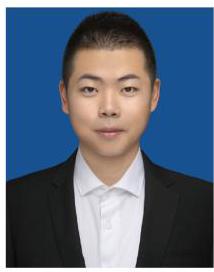
Guangyu Song received the B.Sc. degree in electrical engineering from University of Jinan, Jinan, China, in 2018, and the M.Sc. degree in control engineering from Inner Mongolia University of Science & Technology, Baotou, China, in 2020. He is currently working toward Ph.D. degree in electrical engineering, Xi'an University of Technology, Xi'an, China. His research interests include hybrid energy storage systems, photovoltaic generation systems, power converter control, and microgrid control and stability.
|
|
|
|
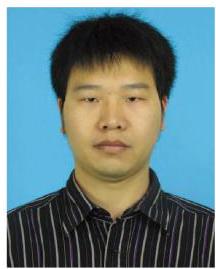
Xinghua Liu received the B.S. degree from Jilin University, Changchun, China, in 2009
|
|
|
|
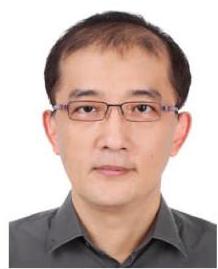
Gaoxi Xiao received the B.S. and M.S. degrees in applied mathematics from Xidian University, Xi'an, China, in 1991 and 1994, respectively, and the Ph.D. degree in computing from Hong Kong Polytechnic University, Hung Hom, Hong Kong, in 1998. He was an Assistant Lecturer with Xidian University from 1994 to 1995. He was a Postdoctoral Research Fellow with Polytechnic University, Brooklyn, NY, USA, in 1999, and a Visiting Scientist with the University of Texas at Dallas, TX, USA, from 1999 to 2001. In 2001, he joined the School of Electrical and Electronic Engineering, Nanyang Technological University, Singapore, where he is currently an Associate Professor. His research interests include complex systems and complex networks, communication networks, smart grids, and system resilience and risk regulation.
|
|
|
|
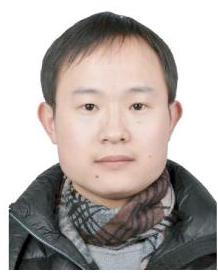
Liansong Xiong received the M.S. and Ph.D. degrees in electrical engineering from Xi'an Jiaotong University (XJTU), Xi'an, China, in 2012 and 2016, respectively. Since 2014, he has been with the School of E-learning, XJTU, as a part-time Faculty Member. In 2016, he joined the School of Automation, Nanjing Institute of Technology (NJIT), Nanjing, China, introduced in High-Level Academic Talent Plan of NJIT. From 2017 to 2019, he was with the Department of Electrical Engineering, The Hong Kong Polytechnic University (PolyU), Hong Kong, as a Research Associate. His current research interests include power quality, multilevel converter, renewable energy generation, and power systems stability.
|
|
|
|
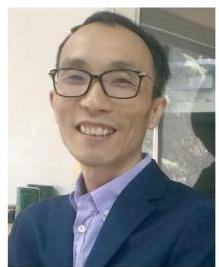
Badong Chen received the Ph.D. degree in computer science and technology from Tsinghua University, Beijing, China, in 2008. He was a Post-Doctoral Researcher with Tsinghua University from 2008 to 2010 and a Post-Doctoral Associate with the Computational NeuroEngineering Laboratory, University of Florida, Gainesville, FL, USA, from 2010 to 2012. He was a Visiting Researcher Scientist with Nanyang Technological University, Singapore, in 2015. He is currently a Professor with the Institute of Artificial Intelligence and Robotics, Xi'an Jiaotong University, Xi'an, China. His research interests are in signal processing, machine learning, artificial intelligence, and robotics.
|
|
|
|
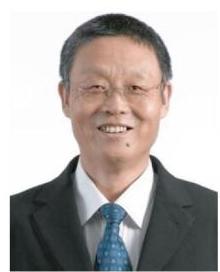
Peng Wang received the B.Sc. degree from Xi'an Jiaotong University, Xi'an, China, in 1978, the M.Sc. degree from Taiyuan University of Technology, Taiyuan, China, in 1987, and the M.Sc. and Ph.D. degrees from the University of Saskatchewan, Saskatoon, SK, Canada, in 1995 and 1998, respectively, all in electrical engineering. He is currently a Professor at Nanyang Technological University, Singapore. His research interests include Power system planning and operation, renewable energy planning, solar/electricity conversion system, power market and power system reliability analysis.
|










 No. 86 Xueyuan South Road, Haidian District, Beijing
 010-62199257
 qkjq@cast.org.cn



 PDF
PDF