Wenlong Ding.
|
|
|
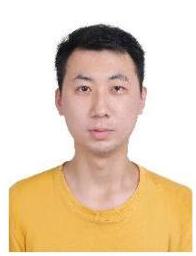
Chao Gao received the B.S. degree from Wuhan University, Wuhan, China, in 2018, and the M.S. degree from Huazhong University of Science and Technology, Wuhan, China, in 2021, both in electrical engineering. He is currently working toward the Ph.D. degree from the Chinese University of Hong Kong, Hong Kong, China. His research interests include modeling and control of power electronic converters.
|
|
|
|
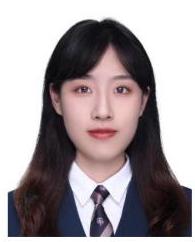
Shuyu Zhang received her B.Eng. degree in Electrical Engineering from Huazhong University of Science and Technology, Wuhan, China, in 2023. She is currently pursuing a Master’s degree in Electrical Engineering at Stanford University. Her research focuses on multilevel converters and the study of electromagnetic interference in Power Electronic Systems.
|
|
|
|
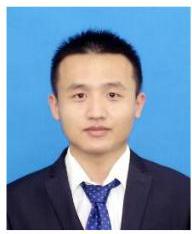
Bo Lu received the B.S. and M.S. degrees from Huazhong University of Science and Technology, Wuhan, China, in 2018 and 2021, respectively, both in electrical engineering. He is currently working toward the Ph.D. degree from Fudan University, Shanghai, China. His research interests include high-precision and high-efficient power amplifiers.
|
|
|
|
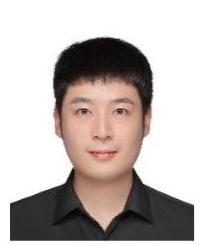
Wenlong Ding received the B.S. and M.S. degrees from Qufu Normal University, Rizhao, China, in 2011 and 2014, respectively, and the Ph.D. degree from Shandong University, Jinan, China, in 2019, all in electrical engineering. From November 2019 to August 2020, he was a Post-Doctoral Research Fellow with the Department of Electronic Engineering, The Chinese University of Hong Kong, Hong Kong, China. He was with the Hong Kong Applied Science and Technology Research Institute (ASTRI), Hong Kong, from September 2020 to November 2021. Since 2021, he has been with the School of Control Science and Engineering, Shandong University. His current research interests include applications of wide band gap (WBG) devices, multilevel converters, and battery charging/testing technology.
|
|
|
|
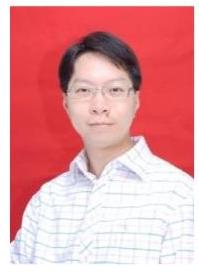
Ka Nang Leung received the B.Eng., M.Phil., and Ph.D. degrees in Electrical and Electronic Engineering from Hong Kong University of Science and Technology (HKUST), Clear Water Bay, Hong Kong, in 1996, 1998, and 2002, respectively. In 2002, he was a Visiting Assistant Professor at HKUST. In 2005, he joined with the Department of Electronic Engineering, Chinese University of Hong Kong, Hong Kong, where he is currently an Associate Professor. His research interests include power-management integrated circuits and low-voltage low-power analog integrated circuits. Dr. Leung is the Chairman of the IEEE (Hong Kong) Electron Device/Solid-State Circuit Joint Chapter in 2012. He is a member in the Editorial Boards and a guest editor of a special issue of Energies. He serves as a Paper Reviewer in numerous IEEE journals and IEEE international conferences. Moreover, he is actively involved in the organization of IEEE international conferences. He is a co-recipient of the Best Paper Awards of TENCON in 2015 and the IEEE Student Symposium ED/SSC in 2011, 2014 and 2019.
|
|
|
|
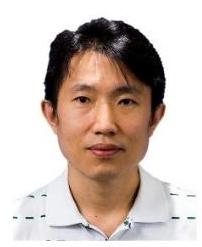
Poh Chiang Loh received the B.Eng. (hons.) and M.Eng. degrees from the National University of Singapore, Singapore, in 1998 and 2000, respectively, and the Ph.D. degree from Monash University, Melbourne, Vic, Australia, in 2002, all in electrical engineering. From 2013 to 2015, he was a Professor with Aalborg University, Aalborg, Denmark. Since 2015, he has been a Tenured Full Professor with the Chinese University of Hong Kong, Hong Kong, China. His research interests include power converters and their grid applications.
|










 No. 86 Xueyuan South Road, Haidian District, Beijing
 010-62199257
 qkjq@cast.org.cn



 PDF
PDF