 Latest Articles
The effects of xylo-oligosaccharides (XOS) on broiler growth performance, immune function, and intestinal health were investigated. A total of 540 one-d-old Arbor Acres Plus broilers were randomly divided into 5 groups with 6 replicates per group and 18 chickens per replicate. Broilers in the control (CON) group received a corn–soybean meal based basal diet, those in the antibiotics (ANT) group received the basal diet plus 500 mg/kg oxytetracycline, and those in XOS groups received the basal diet plus 150, 300, or 450 mg/kg XOS. Compared with CON, the body weight at 42 d and average daily gain from 1 to 42 d were significantly increased in the 150, 450 mg/kg XOS-added and ANT groups (P = 0.018), and the relative expression of claudin-1 and ZO-1 mRNA in the ileum was significantly higher in the 300 and 450 mg/kg XOS-added groups (P < 0.001). The feed conversion ratios (P < 0.001) and abdominal fat rates (P = 0.012) of broilers from 1 to 42 d of age were significantly lower in all XOS-added groups than in the control group. Splenic index (P = 0.036) and bursa of Fabricius index (P = 0.009) were significantly better in the ANT group and each XOS-added group than in the control group. Compared to CON and ANT, serum IgA (P = 0.007) and IgG (P = 0.002) levels were significantly higher in the 300 mg/kg XOS-added group, and the relative abundance of short-chain fatty acid-producing genera (Alistipes) was also significantly higher (P < 0.001). Meanwhile, ileal villus height (P < 0.001) and ratio of villus height to crypt depth (V:C) (P = 0.001) were significantly increased in XOS-added broilers. In analysis of relationships between cecal microbes and the physical barrier of the gut, [Ruminococcus]_torques_group was positively correlated with mRNA expression of ileal ZO-1 and claudin-1 (P < 0.05), and Bacteroides was positively correlated with increased ileal villus height and V:C (P < 0.05). Overall, XOS addition to broiler diets improved growth performance, promoted intestinal health by enhancing intestinal barrier function and regulating cecal microbiota diversity, and had positive effects on immunity.
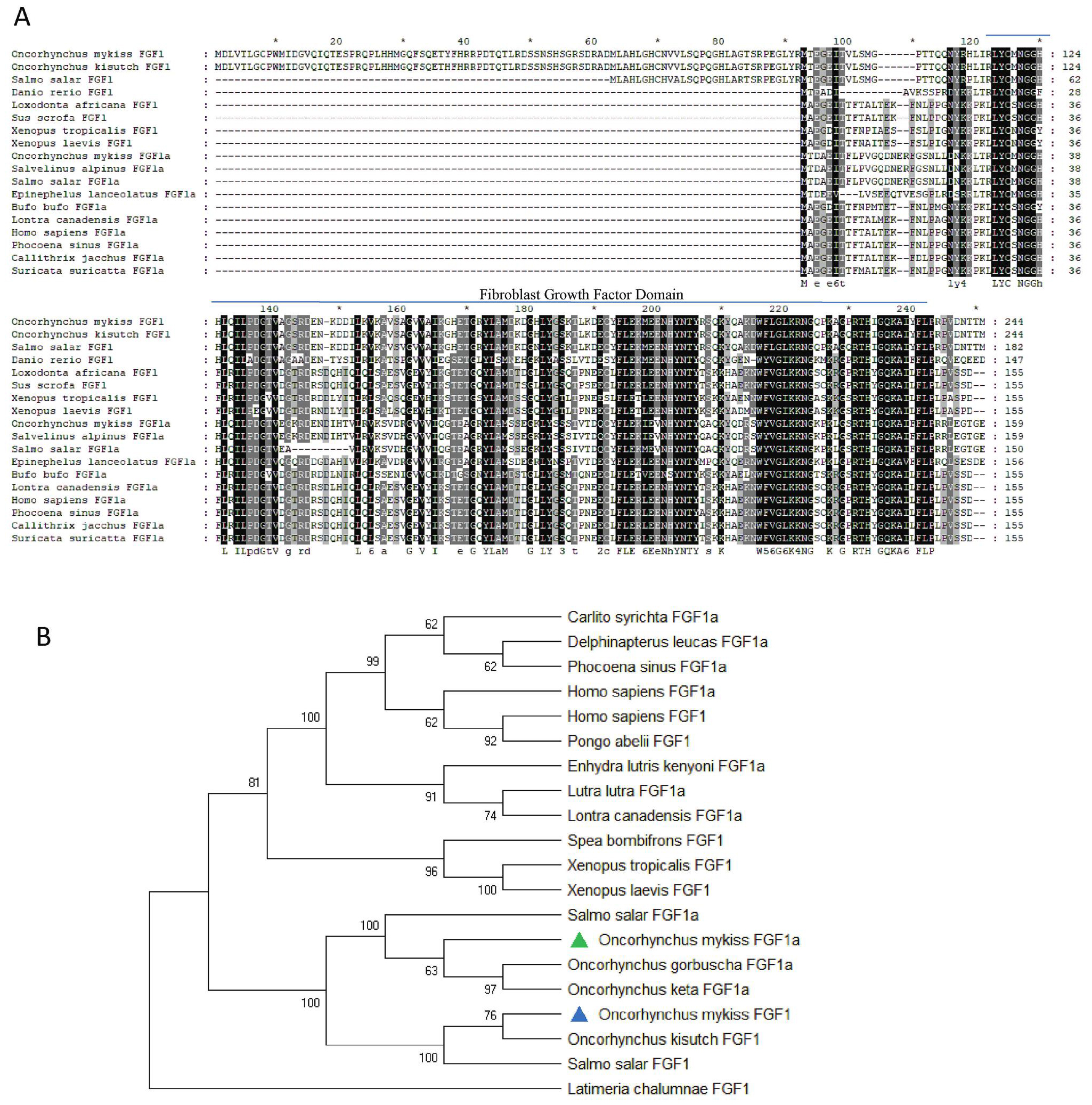
Fibroblast growth factor 1 (FGF1) regulates vertebrate cell growth, proliferation and differentiation, and energy metabolism. In this study, we cloned rainbow trout (Oncorhynchus mykiss) fgf1 and fgf1a, prepared their recombinant proteins (rFGF1 and rFGF1a), and described the molecular mechanisms by which they improve glycolipid metabolism in carnivorous fish. A 31-d feeding trial was conducted to investigate whether they could enhance glycolipid metabolism in rainbow trout on high-carbohydrate diets (HCD). A total of 720 rainbow trout (8.9 ± 0.5 g) were equally divided into 4 groups: the chow diet (CD) group injected with PBS, the HCD group injected with PBS, the HCD group injected with rFGF1 (400 ng/g body weight), and the HCD group injected with rFGF1a (400 ng/g body weight). The results showed that short-term HCD had a significant positive effect on the specific growth rate (SGR) of rainbow trout (P < 0.05). However, it led to an increase in crude fat, serum triglyceride (TG) and glucose content, as well as serum glutamic pyruvic transaminase (GPT) and glutamic oxalacetic transaminase (GOT) contents (P < 0.05), suggesting a negative health effect of HCD. Nevertheless, rFGF1 and rFGF1a showed beneficial therapeutic effects. They significantly reduced the crude fat content of the liver, serum TG, GOT, and GPT contents caused by HCD (P < 0.05). The upregulation in atgl, hsl, and acc2 mRNAs implied the promotion of TG catabolism. Moreover, rFGF1 and rFGF1a contributed to promoting lipolysis by activating the AMPK pathway and reducing lipid accumulation in the liver caused by HCD. In addition, the rFGF1 and rFGF1a-treated groups significantly reduced serum glucose levels and elevated hepatic glycogen content under HCD, and increased glucose uptake by hepatocytes. We observed a decrease in mRNA levels for pepck, g6pase, and pygl, along with an increase in mRNA levels for gys, glut2, and gk in the liver. Furthermore, these proteins regulated hepatic gluconeogenesis and glycogen synthesis by increasing the phosphorylation level of AKT, ultimately leading to an increase in GSK3β phosphorylation. In conclusion, this study demonstrates that rFGF1 and rFGF1a can enhance lipolysis and glucose utilization in rainbow trout by activating the AMPK pathway and AKT/GSK3β axis.
This study aimed to investigate the application of cottonseed protein concentrate (CPC) in Chinese mitten crabs (Eriocheir sinensis). First, the apparent digestibility coefficient (ADC) of CPC, fish meal and soybean meal were compared in crabs (21.72 ± 0.33 g). The protein ADC of CPC was 90.42%, which was significantly higher than that of soybean meal (83.16%) (P < 0.05). The ADC of Phe, Cys and Glu of CPC were significantly higher than those of fish meal, while the ADC of Ile, Leu, Lys, Met, Thr and Ala of CPC were significantly lower (P < 0.05). Second, we investigated the effects of fish meal substitution by CPC on growth performance, free amino acid profile, and expression of genes related to nutrient metabolism in crabs. Six diets were formulated by replacing 0%, 15%, 30%, 45%, 60% and 75% fish meal with CPC, namely FM, CPC15, CPC30, CPC45, CPC60, and CPC75. A total of 630 crabs (1.68 ± 0.00 g) were randomly divided into 18 tanks (3 tanks per group) and fed 3 times daily for 9 weeks. Results showed that CPC75 group significantly reduced growth performance, feed conversion efficiency, and free Ile, Leu, Lys, Met, and Thr contents in muscle (P < 0.05). The contents of free amino acids (Arg, His, Ile, Leu, Lys, Met, Phe, Thr, Val, Ala, Cys, Glu, Gly, Ser and Tyr) in hepatopancreas decreased linearly with the increase of dietary CPC level (P < 0.05). The substitution of more than 45% fish meal with CPC significantly decreased the concentration of delicious amino acids (Ala, Glu and Gly) in hepatopancreas (P < 0.05), which might adversely affect crab flavor. The expression of genes related to antioxidant capacity, protein transport, TOR pathway and lipid metabolism was significantly downregulated by increasing dietary CPC level (P < 0.05). In conclusion, based on the quadratic regression analysis of FCR and PER, the optimal replacement levels of fish meal with CPC in crab diet containing 35% fish meal were 32.36% and 35.38%, respectively. It is recommended that Ile, Leu and Thr be supplemented in addition to Met and Lys in the application of CPC.
The use of hemp as a forage source in livestock diets has been less studied because bioactive residues in animal tissues may pose a risk to consumers. This study investigated the effects of partial substitution of alfalfa hay (AH) with hemp forage (HF) in growing goat diets on growth performance, carcass traits, ruminal fermentation characteristics, rumen microbial communities, blood biochemistry, and antioxidant indices. Forty Xiangdong black goats with body weight (BW) 7.82 ± 0.57 kg (mean ± SD) were grouped by BW and randomly assigned into one of the four treatment diets (n = 10/treatment) in a completely randomized design. The goats were fed ad libitum total mixed rations containing 60% forage and 40% concentrate (DM basis). The diets included control (CON; 60% AH and 40% concentrate), 55% AH and 5% HF (HF5), 50% AH and 10% HF (HF10), and 40% AH and 20% HF (HF20). Increasing the substitution of HF for AH linearly decreased (P = 0.004) DM intake and improved feed conversion efficiency. However, final BW, average daily gain, carcass traits, meat quality, and most blood biochemistry indices did not differ among treatments. The ruminal NH3-N concentration (P = 0.003) and blood urine nitrogen (P = 0.050) linearly increased (P < 0.01) with increasing substitution rate of HF, whereas the total volatile fatty acids concentration quadratically changed (P = 0.007). Substitution of AH with HF had no effect on the diversity and richness of ruminal microbes, though it linearly decreased (P = 0.040) Prevotella_1 and linearly increased (P = 0.017) Rikenellaceae_RC9_gut_group. The cannabinoids and/or their metabolites were detected in both ruminal filtrates (8) and plasma (4), however, no detectable cannabinoid-related residues were observed in meat. These results indicate that the HF could be used to partially substitute AH in goat diets, whereas the effects vary between substitution rates of HF for AH. Although no cannabinoid-related residues were detected in meat, the presence of cannabinoids residues in blood warrants further study of HF feeding to confirm the cannabinoids residues are not present in the animal products.
This study aimed to understand how molecular mechanisms controlling water and urea metabolism at the finishing phase can be affected by previous plane of nutrition of crossbred Angus beef steers. Twenty-four (n = 24) animals were randomly distributed into either a moderate (MP) or high plane of nutrition during the background phase for 85 d. Animals were then blocked by their previous plane and were moved onto a 105-d finishing phase in a 2 × 2 factorial arrangement. The forage-finished group received only high-quality alfalfa hay, whereas the grain-fed group received a high grain diet (80% whole corn and 20% alfalfa hay). By the end of the finishing phase, animals were harvested and tissue samples from the rumen and kidney were collected. Changes in gene expression of aquaporins (AQP)-2, -3, -4, -7, ATP1A1, ATP1B1, SGK1, CLIC1 (kidney and rumen), UT-A1 (kidney only) and UT-B (rumen only), were assayed via real-time qPCR; 18S rRNA was used as an endogenous control. One-way ANOVA followed by Tukey's post hoc analysis was conducted. When animals were from MP, forage-finishing increased the relative abundance of AQP3 (P ≤ 0.05), AQP7 (P ≤ 0.05), ATP1B1 (P ≤ 0.05), and SGK1 (P ≤ 0.05) in the kidney when compared to grain-fed animals. In the rumen, for the MP group, AQP7 was differentially expressed in both treatments at the finishing phase (P ≤ 0.01), with forage-finished steers having the highest expression of AQP7. For the MP group, UT-B had a tendency of presenting a higher expression on grain-fed animals (P = 0.075). Overall, these results suggest that previous plane can impact expression of genes associated with water and urea metabolism during the finishing phase, namely AQP3, AQP7, ATP1B1, and SGK1 in the kidney, and AQP7 and UT-B in the rumen. The greatest impact observed on gene expression changes of investigated genes at the finishing phase was reflective of animals backgrounded on the moderate previous plane.
Standardized ileal digestibility coefficients (SIDC) of nitrogen (N) and amino acids (AA) in two protein sources (soybean meal [SBM] and canola meal [CM]) were investigated at six broiler ages (d 7, 14, 21, 28, 35, and 42). Two assay diets were formulated to contain either SBM (413 g/kg) or CM (553 g/kg) as the sole dietary AA source. Titanium dioxide (5 g/kg) was added as an indigestible marker. A total of 696 male broilers at 1 d old were allotted to 12 replicate cages per age group. Each assay diet was offered to birds for 4 d prior to the ileal digesta collection on d 7 (14 birds/cage), 14 (12 birds/cage), 21 (10 birds/cage), 28 (8 birds/cage), 35 (8 birds/cage) and 42 (6 birds/cage), respectively. The apparent digestibility coefficients were standardized using age-specific basal endogenous AA flows. In the SBM group, though the SIDC of N tended to be influenced (quadratic; P = 0.075) by age, no linear or quadratic response of age effect was observed on the average SIDC of indispensable (IAA) and total AA (TAA). An age effect (quadratic; P < 0.05) was observed on the average SIDC of dispensable AA (DAA) in SBM with the highest value recorded at d 7, followed by a decrease from d 14 to 28, which increased beyond d 35. The SIDC of some individual AA (Arg, Thr, Trp, Cys, Pro) were affected (P < 0.05 or P < 0.001) in a quadratic manner by age. In the CM, the SIDC of N, average SIDC of IAA, DAA and TAA were influenced (quadratic; P < 0.05 or P < 0.001) by age. The SIDC of N and average SIDC of DAA and TAA were higher from d 7 to 14, declined at d 21, and then increased beyond d 28. The average SIDC of IAA was low between d 7 and 28 and increased thereafter. The SIDC of individual AA were affected (linear or quadratic; P < 0.05 or P < 0.001) by different magnitudes by age. The age influence on the SIDC AA was variable, depending on the protein source and AA. The results demonstrate that age-specific SIDC AA data might need consideration in broiler feed formulations.
Phytin is the Ca2+-Mg2+-K+ salt of phytic acid that is created and deposited in the aleurone layer and/or germ of grains and legumes. Its high presence in feedstuffs for fowl and swine diets results in it being a universal and significant impediment to optimum performance. Phytin impairs gastrointestinal recovery of a wide array of nutrients, the effect varying with the nutrient concerned. On exposure to low pH during gastric digestion, phytin dissociates into phytic acid and solubilized Ca2+. Even at low gastric pH, phytic acid is negatively charged which forms the basis of its anti-nutritive behavior. Pepsinogen has extensive basic amino acids on its activation peptide that are presented as cations at low pH which are targeted by pepsin for activation. Partially crystalized Ca2+ near the enzyme's active site further stabilizes its newly formed structure. Thus, phytic acid appears to interfere with gastric digestion by several mechanisms; interfering with pepsinogen activation by binding to the polypeptide's basic amino acids; coordinating free Ca2+, destabilizing pepsin; binding some dietary proteins directly, further compromising gastric proteolysis. Upon digesta attaining neutrality in the duodenum, Ca2+ and other cations re-bind with accessible anions, phytic acid being a significant contender. Phytate not only binds free cations but can also strip them from enzymes (e.g. Ca2+, Zn2+) which reduces their structural resistance to autolysis and ability as co-factors (e.g. Zn2+) to increase enzyme activity. Goblet cells initially employ Ca2+ as an electronic shield between mucin layers enabling granule formation and cell storage. After mucin granule release, Ca2+ is progressively displaced by Na+ to free the viscous mucins enabling its translocation. Mucin entangles with the glycocalyx of adjacent enterocytes thereby constructing the unstirred water layer (USWL). Excessive removal of Ca2+ from mucin by phytic acid increases its fluidity facilitating its loss from the USWL with its associated Na+. This partly explains increased mucin and Na+ losses noted with high phytate diets. This review suggests that phytic acid binding of Ca2+ and less so Zn2+ is the basis for the diversity in nutrient losses encountered and that such losses are in proportion to dietary phytate content.
The global trend towards raising broiler chickens without the use of in-feed antibiotics (IFAs) means that there is an ongoing need to develop alternative treatments capable of delivering the benefits that IFAs previously provided. IFAs supported the productivity performance of chickens and played a key role in maintaining their health. Necrotic enteritis (NE) is an important disease of broilers that affects health, productivity, and welfare, and was previously well controlled by IFAs. However, with the reduction in IFA use, NE is resurgent in some countries. Vaccines and various feed additives, including pre-, pro-, and postbiotics, phytobiotics, fatty acids, and phage therapies have been introduced as alternative methods of NE control. While some of these feed additives have specific activity against the NE pathogen, Clostridium perfringens, most have the more general goal of reinforcing gut health. Extensive reviews of the effects of many of these feed additives on gut health have been published recently. Hence, rather than cover previously well reviewed areas of research this review focuses on the challenges and pitfalls in undertaking experimental assessment of alternative NE treatments and translating laboratory research to real world commercial production settings. The review is based on the author's particular experience, reading, thoughts, and analysis of the available information and inevitably presents a particular understanding that is likely to be at odds with others thinking on these issues. It is put forward to stimulate thinking and discussion on the issues covered.
Essential oils derived from plants can provide biological impacts to livestock species. Scientific studies researching essential oils in livestock have investigated various essential oils for prevention and treatment of microbial infection and parasites as well as to enhance milk production, animal performance and rumen function. Despite the availability of several commercial products containing essential oils to promote animal health and production, the vast amount of essential oils, modes of application, and effective concentrations of the essential oils suggest there are more opportunities for essential oils to be utilized in commercial livestock production and veterinary medicine. The objective of this review is to contribute to the understanding of the value that essential oils can provide to the ruminant diet and to examine the biological impact of various essential oils on economically important production traits of ruminant species.
The compromised egg quality and leg abnormality during the end of the laying cycle (after 40 weeks) have been leading to poor animal welfare and substantial economic losses. Therefore, the effects of fermented calcium (Ca) butyrate, produced by fermentation by Clostridium butyricum, on production, eggshell quality, and tibial property of hens were explored. A total of 192 Hy-line brown laying hens at 50-week-old were assigned to a basal diet or the basal diet with 300 mg/kg of the fermented Ca butyrate from 50 to 58 weeks of age. Each treatment had 6 replicates with 16 hens each. The diet supplemented with 300 mg/kg fermented Ca butyrate notably increased egg weight, ovarian follicle number, and eggshell strength (P = 0.072) as compared to the basal diet, which were associated with cytokine secretion, toll-like receptor signaling pathways, and intestinal immunity based on the RNA-seq data from the granulosa. Dietary Ca butyrate inclusion decreased the expression of ileal tumor necrosis factor-alpha and serum pro-inflammatory cytokine concentration, as well as increased the content of serum immunoglobulin A when compared to the basal diet (both P < 0.05). The birds that received fermented Ca butyrate diets exhibited higher villus height (P < 0.05) and upregulated expression of tight junction proteins, whereas it did not alter the composition of cecal microbiota (P > 0.05). In addition, the diet with fermented Ca butyrate reduced the number of osteoclasts in the proximal tibia and the level of C-terminal cross-linked telopeptide of type I collagen, a bone resorption marker (P < 0.05), whereas it tended to increase the concentration of the procollagen type I N-terminal propeptide that reflects bone formation marker in serum. Moreover, the layers fed fermented Ca butyrate diets possessed higher (P < 0.05) bone area and trabecular number of the proximal tibia, yield load, and ultimate load than those that consumed basal diets. Collectively, dietary fermented Ca butyrate supplementation in post-peak layer diets improved the ovarian function and tibia quality, which might be related to enhancing intestinal integrity and consequently decreasing inflammation mediated bone resorption.










 No. 86 Xueyuan South Road, Haidian District, Beijing
 010-62199257
 qkjq@cast.org.cn


Copyright © 2025 China Association for Science and Technology. All rights reserved. For all open access content, the relevant licensing terms apply.
Sponsored by the Office of the Leading Group for Cybersecurity and Informatization of CAST, and supported by Science and Technology Review Publishing House

